Cheer Practice Plan PDF: A Comprehensive Guide
A well-structured cheer practice plan PDF streamlines sessions, encompassing warm-ups, skill drills, and team activities for optimal safety and performance enhancement.
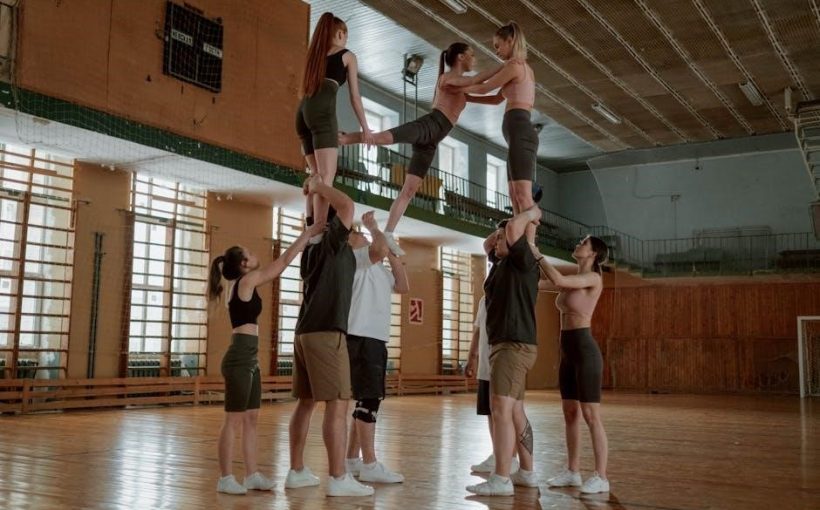
Effective cheer practice planning is crucial for maximizing team potential. A thoughtfully designed plan, often utilizing a cheer practice plan PDF, ensures focused training sessions. These plans move beyond simply running routines; they incorporate structured warm-ups, targeted skill development, and dedicated choreography practice.
Coaches benefit from utilizing templates – easily editable via platforms like Canva and Google Drive – to customize drills and schedules. This organization streamlines practices, boosts team morale, and ultimately, contributes to improved performance and a safer training environment for all cheerleaders.
The Importance of a Structured Cheer Practice Plan
A structured cheer practice plan, often delivered as a PDF, is essential for progress. It moves beyond ad-hoc training, fostering consistent skill refinement and routine mastery. Utilizing templates allows coaches to allocate time effectively for warm-ups, drills, and choreography.
This organization minimizes wasted time, maximizes athlete engagement, and ensures a safe progression of skills. A well-defined plan also aids in tracking individual and team goals, ultimately leading to enhanced performance and a more cohesive team dynamic.
Benefits of Using a Cheer Practice Plan PDF
Employing a Cheer Practice Plan PDF offers numerous advantages for coaches and teams. PDFs provide a readily accessible, shareable document outlining practice schedules, drills, and safety protocols. Customizable templates, like those available on Canva and Google Drive, simplify modification and collaboration.
This digital format promotes organization, ensuring consistent practice execution and efficient time management. Coaches benefit from streamlined planning, while athletes gain clarity on expectations, fostering a focused and productive training environment.
Essential Components of a Cheer Practice Plan
Effective plans integrate warm-ups, skill-building drills (jumps, stunts, motions), and choreography practice, prioritizing safety and progressive skill development for optimal results.
Warm-up Routines (10-15 minutes)
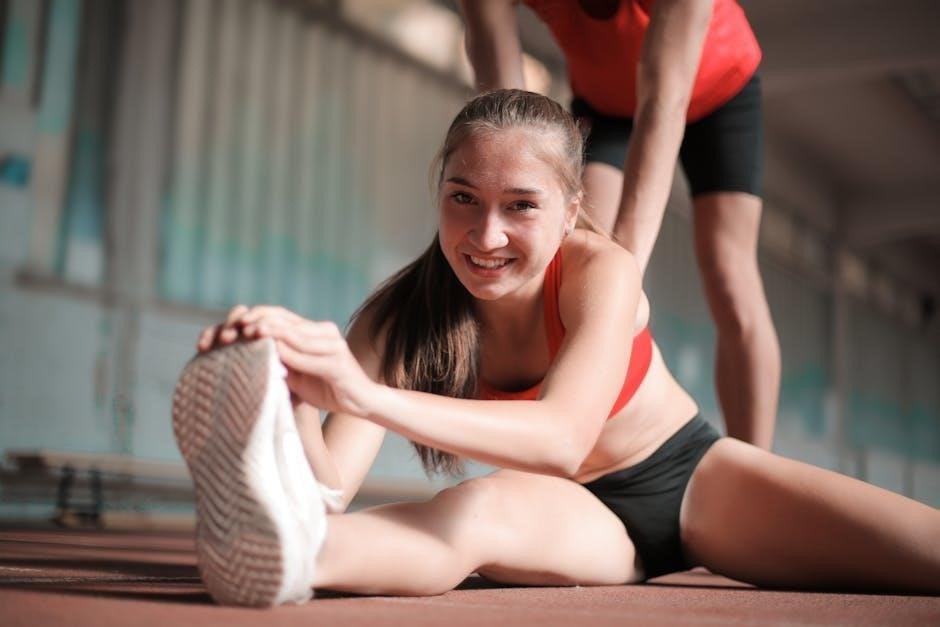
Warm-up routines are crucial for preparing athletes, dedicating 10-15 minutes to prevent injuries and enhance performance. These sessions should incorporate dynamic stretching exercises, focusing on controlled movements through a full range of motion, preparing muscles for activity.
Complement this with cardiovascular warm-up activities like light jogging or jumping jacks to elevate heart rate and increase blood flow. A proper warm-up increases muscle elasticity, improves flexibility, and mentally prepares the team for the demands of practice, ultimately contributing to a safer and more productive session.
Dynamic Stretching Exercises
Dynamic stretching prepares muscles for cheerleading’s demands, utilizing controlled movements through a full range of motion. Examples include arm circles, leg swings, torso twists, and walking lunges.
These exercises increase blood flow, improve flexibility, and enhance muscle elasticity, unlike static stretches which are better suited for cool-downs. Focus on controlled, repetitive motions, gradually increasing the range of movement. Dynamic stretching actively prepares the body, reducing injury risk and optimizing performance during skill-building and routines.
Cardiovascular Warm-up Activities
Cardiovascular warm-ups elevate heart rate and body temperature, preparing athletes for strenuous activity. Incorporate activities like jogging, jumping jacks, high knees, butt kicks, and jump rope for 5-10 minutes.
These exercises increase blood flow to muscles, improving oxygen delivery and enhancing performance. A proper cardiovascular warm-up reduces muscle stiffness and injury risk. Gradually increase intensity, ensuring athletes are adequately prepared for the demands of cheer practice, including jumps, stunts, and tumbling.
Skill-Building Drills (20-30 minutes)
Dedicated skill-building drills are crucial for improvement. This segment focuses on refining jumps, tumbling, stunts, and motion techniques. Allocate time for each skill, providing targeted instruction and repetition.
Drills should progress from basic to advanced levels, ensuring athletes master foundational elements before tackling complex maneuvers. Coaches should offer individualized feedback and corrections. Consistent practice of these drills builds strength, flexibility, and coordination, ultimately enhancing overall cheerleading performance.
Jumps and Tumbling Drills
Jumps and tumbling drills enhance athleticism and technique. Begin with jump series – toe touches, herkies, pikes – focusing on height, form, and arm placement. Progress to tumbling drills, starting with forward rolls, backward rolls, and handstands.
Introduce cartwheels, round-offs, and back handsprings with proper spotting. Emphasize safe landing techniques and core engagement. Drills should build progressively, increasing difficulty as skills improve. Consistent practice builds power, flexibility, and confidence.
Stunt Progression Drills
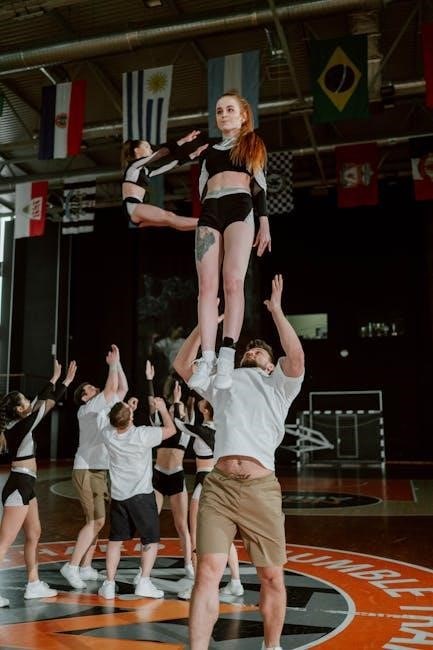
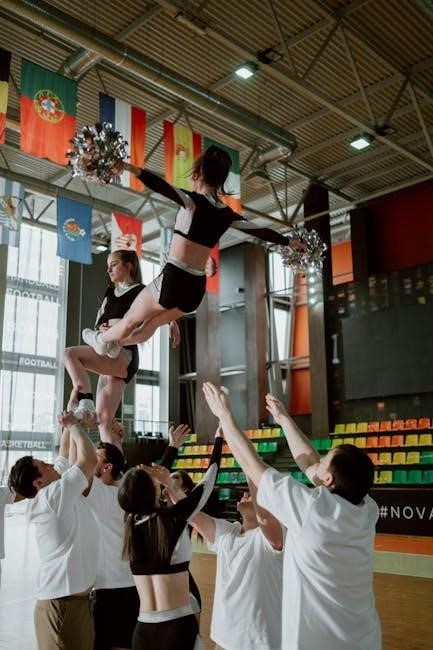
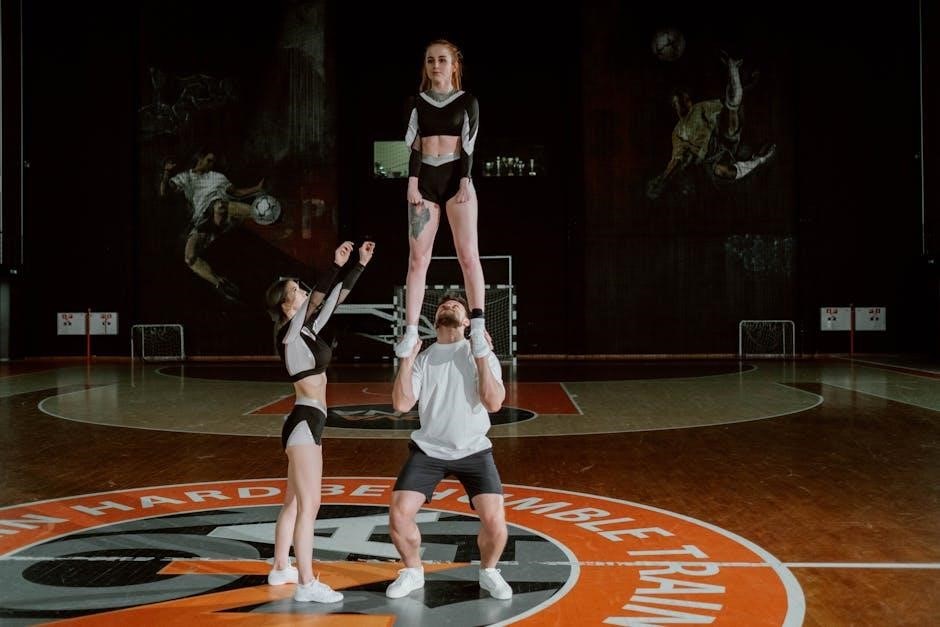
Stunt progression drills prioritize safety and skill development. Start with foundational skills like prepping, lifting, and basing techniques. Progress systematically – from single-base stunts to double-base stunts, and eventually to more complex transitions.
Focus on proper form, communication, and spotting. Drills should include controlled lifts, stable extensions, and safe dismounts. Emphasize teamwork and trust between bases, flyers, and spotters. Consistent practice builds strength, coordination, and confidence in stunt execution.
Motion Technique Drills
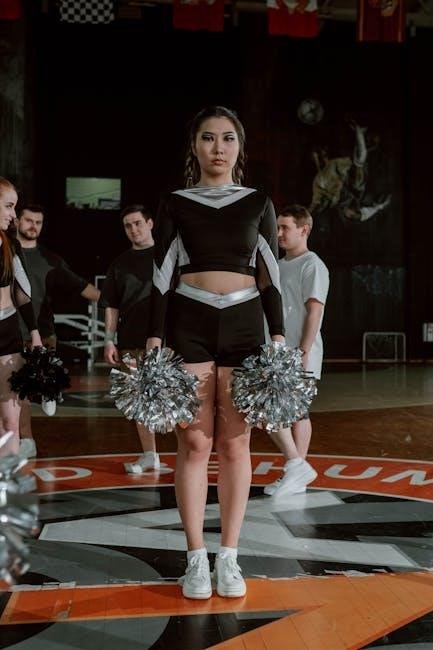
Motion technique drills refine sharpness, precision, and synchronization. Focus on correct arm angles, hand shapes, and body alignment for each motion – high V, low V, T, and K. Drills should emphasize hitting each position cleanly and powerfully.
Incorporate mirror work and video analysis to provide visual feedback. Practice transitions between motions, ensuring smooth and fluid movements. Repetition is key to building muscle memory and achieving a polished, unified look. Consistent practice elevates overall routine impact.
Choreography and Routine Practice (30-45 minutes)
This segment focuses on bringing the routine to life. Begin with a section breakdown, repeating smaller segments until mastered. Full routine run-throughs build stamina and flow. Pay close attention to transitions and synchronization – these elements significantly impact the routine’s overall quality.
Encourage athletes to provide feedback and identify areas for improvement. Video recording allows for detailed analysis. Consistent repetition and focused correction are crucial for polishing the routine and achieving a competition-ready performance.
Section Breakdown and Repetition
Divide the choreography into manageable sections, focusing on 8-16 counts at a time. Repeat each section slowly and deliberately, emphasizing proper technique and synchronization. Increase the tempo gradually as the team gains confidence. Isolate challenging movements for individual attention and correction.
Utilize visual aids, like mirroring or video demonstrations, to enhance understanding. Encourage peer coaching and constructive feedback. Consistent repetition builds muscle memory and ensures a clean, polished performance.
Full Routine Run-Throughs
Schedule regular full routine run-throughs to build stamina and assess overall performance. Start at a slower pace, focusing on transitions and synchronization. Gradually increase speed while maintaining precision. Record run-throughs for self-evaluation and coaching feedback.
Encourage the team to perform with energy and enthusiasm, simulating game-day conditions. Address any weaknesses or inconsistencies observed during the run-through. Consistent full run-throughs solidify the routine and boost team confidence.
Transitions and Synchronization Practice
Dedicate specific practice time to seamless transitions between skills and formations. Focus on precise timing and clean movements during these shifts. Synchronization is key; emphasize performing motions and stunts in unison. Utilize visual cues and counts to maintain alignment.
Break down complex transitions into smaller segments for easier learning. Record practice sessions to identify synchronization issues. Consistent practice will refine transitions and create a polished, unified routine.
Types of Cheer Practice Sessions
Cheer practice sessions vary – regular season focuses on refinement, skill-focused builds technique, and choreography-focused learns/polishes routines for peak performance.
Regular Season Practice Plans
During the regular season, cheer practice plans prioritize routine refinement, ensuring synchronization and impactful execution. These sessions heavily emphasize conditioning and endurance building to maintain energy throughout performances and competitions.
Coaches focus on polishing existing choreography, addressing weaknesses, and solidifying transitions. Drills concentrate on maintaining skill levels and building stamina. Regular team meetings are crucial for communication, goal setting, and fostering team morale.
The aim is consistent, high-quality performances, not necessarily learning new skills, but perfecting what’s already mastered.
Focus on Routine Refinement
Routine refinement during regular season practices centers on meticulous detail and precision. Coaches dedicate time to cleaning transitions, ensuring seamless flow between elements. Synchronization is paramount, demanding consistent timing and alignment from the entire team.
Repetition is key, with sections run repeatedly to build muscle memory and eliminate errors. Attention is given to sharpness of motions and overall presentation. This phase isn’t about learning new skills, but perfecting existing choreography for a polished performance.
Conditioning and Endurance Building
Regular season practices heavily emphasize physical conditioning to sustain energy throughout routines. Interval training, incorporating bursts of high-intensity activity followed by short rests, builds stamina. Core strengthening exercises are crucial for stability during stunts and jumps.
Cardiovascular workouts, like running or jumping jacks, improve endurance. Coaches also integrate exercises targeting specific muscle groups used in cheerleading. This ensures athletes can perform demanding routines with power and maintain form throughout competitions.
Skill-Focused Practice Plans
These plans prioritize targeted skill development, dedicating practice time to mastering specific techniques. Coaches provide individualized coaching and constructive feedback, addressing each cheerleader’s unique needs. Drills are broken down into manageable steps, fostering progressive improvement.
Skill-focused sessions allow for concentrated repetition, solidifying proper form and building confidence. This approach is vital for learning new stunts, jumps, or tumbling passes, ensuring safety and maximizing potential.
Targeted Skill Development
Focused practice isolates specific skills – jumps, tumbling, stunts, or motions – for intensive work. Coaches break down complex movements into smaller, achievable components, emphasizing proper technique and form. Repetition is key, building muscle memory and increasing proficiency.
This approach allows for personalized attention, addressing individual weaknesses and maximizing each cheerleader’s potential. Progress is carefully monitored, ensuring a safe and effective learning environment.
Individualized Coaching and Feedback
Effective skill-focused plans incorporate one-on-one coaching, providing tailored feedback to each cheerleader. Coaches observe technique, identify areas for improvement, and offer specific corrections. This personalized approach accelerates learning and builds confidence.
Constructive criticism is delivered positively, fostering a growth mindset. Regular check-ins and progress assessments ensure athletes remain motivated and on track to achieve their individual goals within the team framework.
Choreography-Focused Practice Plans
These plans prioritize learning and perfecting new routines, or “cleaning” existing ones. Initial sessions break down choreography into manageable sections for repetition, ensuring each cheerleader understands their role.
Subsequent practices focus on full run-throughs, emphasizing transitions and synchronization. Coaches provide feedback on timing, precision, and overall performance quality. Polishing routines involves refining details and building stamina for a flawless execution, ultimately boosting team confidence.
New Routine Learning
Introducing a new routine demands a phased approach. Begin by teaching counts and formations slowly, breaking down complex sequences into smaller, digestible parts. Coaches should demonstrate each section clearly, providing individual attention as needed.
Repetition is key; gradually increase tempo as the team gains confidence. Encourage questions and offer constructive criticism. Focus on building muscle memory and ensuring everyone understands the choreography before attempting full run-throughs.
Routine Cleaning and Polishing
Once the routine is learned, focus shifts to refinement. This involves meticulous attention to detail – synchronizing motions, tightening formations, and perfecting transitions. Video review is invaluable, allowing the team to identify areas needing improvement.
Coaches should provide specific feedback on technique and timing. Repetition, combined with targeted corrections, will elevate the routine’s overall polish and impact. Strive for precision and a unified, dynamic performance.
Utilizing Cheer Practice Schedule Templates
Templates offer customizable drill and routine allocation, alongside efficient timing and duration management, ensuring organized and productive cheer practice sessions.
Customizable Schedule Features
Cheer practice schedule templates empower coaches with adaptable features for tailored training. These templates facilitate precise drill and routine allocation, ensuring focused skill development. Effective timing and duration management optimizes each session, maximizing athlete engagement and minimizing wasted time.
Furthermore, coaches can easily adjust schedules to accommodate varying skill levels and team needs. Editable sections allow for seamless integration of new choreography, conditioning exercises, and safety protocols. This flexibility is crucial for maintaining a dynamic and effective practice environment, ultimately boosting team performance.
Drill and Routine Allocation
Effective drill and routine allocation within a cheer practice plan PDF is paramount for targeted skill improvement. Templates allow coaches to strategically designate specific time slots for jumps, tumbling, stunts, and motions.
This focused approach ensures each element receives adequate attention, fostering consistent progress. Allocating dedicated blocks for routine practice—section breakdown, full run-throughs, and transitions—enhances synchronization and overall performance quality. Careful planning maximizes practice efficiency and athlete development.
Timing and Duration Management
Precise timing and duration management are crucial components of a successful cheer practice plan PDF. Templates facilitate the scheduling of each activity, from warm-ups (10-15 minutes) to choreography (30-45 minutes), ensuring a balanced session.
Allocating appropriate time for skill-building drills (20-30 minutes) prevents fatigue and promotes focused learning. Effective duration control maximizes athlete engagement and minimizes the risk of injury, leading to productive and efficient practices.
Editable Templates (Canva & Google Drive)
Leverage readily available, editable templates within Canva and Google Drive to customize your cheer practice plan PDF effortlessly. These platforms offer user-friendly interfaces for modifying schedules, drills, and safety protocols.
Accessibility and seamless collaboration are key benefits, allowing coaches to share plans with assistants and athletes. A free Canva account unlocks further customization options, streamlining the planning process and ensuring a professional, organized approach.
Ease of Modification and Sharing
Editable templates empower coaches to quickly adjust practice plans based on team progress and unforeseen circumstances. Modifications are simple, ensuring the schedule remains relevant and effective.
Sharing these plans with team members and assistant coaches is streamlined through Google Drive’s collaborative features. This fosters clear communication and ensures everyone is aligned with practice objectives, maximizing efficiency and team cohesion throughout the season.
Accessibility and Collaboration
Utilizing platforms like Canva and Google Drive ensures practice plans are readily accessible to the entire cheer team, regardless of location; This 24/7 availability promotes individual review and preparation.
Google Drive’s collaborative tools allow multiple coaches to simultaneously contribute to and refine the plan, fostering teamwork and shared responsibility. This streamlined workflow enhances communication and ensures a cohesive, well-prepared team ready to excel.
Safety Considerations in Cheer Practice
Prioritizing proper spotting techniques, injury prevention strategies, and safe stunt progressions are crucial elements within a comprehensive cheer practice plan PDF.
Proper Spotting Techniques
Effective spotting is paramount for cheerleader safety, detailed within a robust cheer practice plan PDF. Spotters must undergo thorough training, understanding their responsibilities to protect flyers during jumps and stunts.
This includes maintaining a firm grip, providing stable support, and reacting quickly to prevent falls. A well-defined plan outlines spotting assignments, ensuring adequate coverage for each skill.
Regularly reviewing spotting techniques and emphasizing communication between flyers, bases, and spotters is essential for minimizing injury risk and fostering a secure practice environment.
Spotter Responsibilities and Training
A comprehensive cheer practice plan PDF emphasizes rigorous spotter training. Responsibilities include maintaining a secure grip, actively watching the flyer, and providing immediate support to prevent falls during stunts and tumbling.
Training should cover proper hand placement, body positioning, and communication signals. Spotters must understand stunt progressions and recognize potential hazards.
Regular drills and evaluations ensure spotters are proficient and prepared to react effectively, safeguarding flyers and promoting a safe practice environment, as detailed in the plan.
Injury Prevention Strategies
A robust cheer practice plan PDF prioritizes injury prevention through comprehensive strategies. These include consistent conditioning exercises to build strength and endurance, alongside dedicated flexibility routines to enhance range of motion.
Safe stunt progression is crucial, ensuring athletes master foundational skills before advancing.
The plan also emphasizes proper warm-up protocols and cool-down periods, minimizing muscle strains and promoting overall athlete well-being, ultimately fostering a safer practice environment.
Conditioning and Flexibility Exercises
A detailed cheer practice plan PDF incorporates targeted conditioning and flexibility exercises. These routines build essential strength, stamina, and agility for demanding routines.
Exercises should include plyometrics for explosive power, core work for stability, and cardiovascular training for endurance.
Dynamic and static stretching are vital, improving range of motion and reducing injury risk, ensuring athletes are physically prepared for the rigors of cheerleading.
Safe Stunt Progression
A comprehensive cheer practice plan PDF prioritizes safe stunt progression, crucial for minimizing injury risk. Begin with foundational skills, gradually increasing complexity as athletes demonstrate mastery.
Proper spotting techniques are paramount at every stage, ensuring immediate support if needed.
The plan should detail clear progressions, emphasizing controlled movements and consistent technique before advancing to more challenging stunts, fostering a secure learning environment.
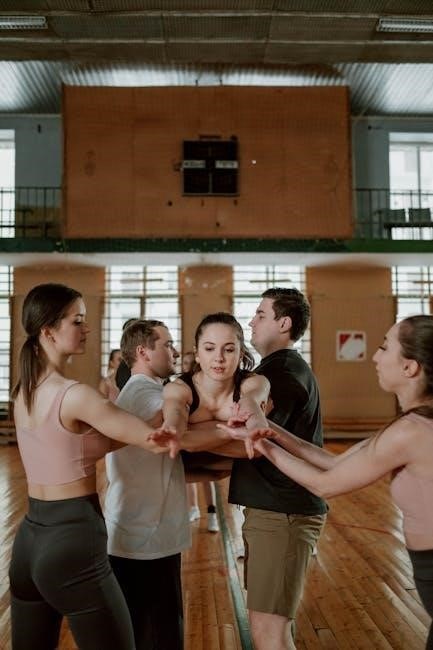
Resources for Cheer Coaches
Downloadable PDF templates, free printables, and organized binders offer coaches customizable drills, schedules, and safety protocols for efficient, streamlined practices.
Free Printable Cheer Coach Binder Printables
Utilize free printable cheer coach binder printables to maintain exceptional organization throughout the season! These resources are designed to effectively manage practice schedules, crucial game day routines, and essential team information.
Sections are thoughtfully included for setting clear goals, meticulously tracking team rosters, and documenting detailed performance notes.
Having everything readily available will ensure your team remains focused and consistently on track towards achieving success. These printables are a cornerstone of effective cheerleading program management.
Organization of Schedules and Rosters
Efficiently organize your cheerleading season with dedicated sections for practice schedules and comprehensive team rosters. Printable binders provide a centralized location for all critical dates, times, and locations, ensuring everyone stays informed and prepared.
Rosters allow for quick access to athlete contact information, skill levels, and emergency details.
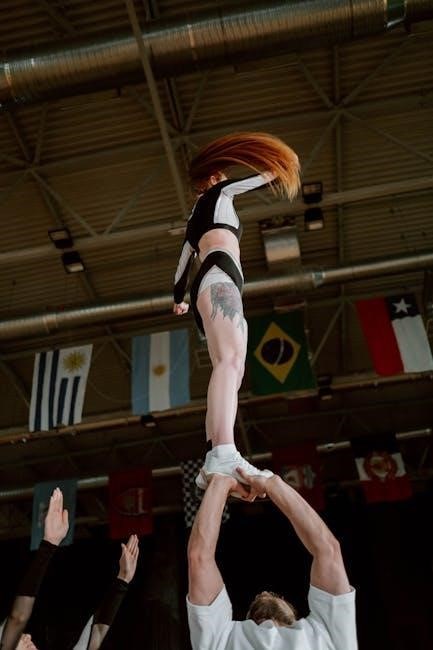
Maintaining these documents in a binder format promotes accessibility and minimizes the risk of lost or misplaced information, contributing to a smoother, more professional program.
Downloadable PDF Templates for Practice Plans
Access customizable PDF templates designed to simplify your cheer practice planning process. These resources offer pre-designed layouts for drills, routines, and essential safety protocols, saving you valuable time and effort.
Templates allow for easy modification to suit your team’s specific needs and skill levels.
Downloadable formats ensure compatibility across devices, facilitating seamless sharing and collaboration among coaches and team members, ultimately leading to more organized and productive practices.
Customizable Drills and Safety Protocols
PDF templates provide a foundation for adaptable drill sequences, allowing coaches to tailor exercises to specific skill levels and team goals. Easily modify existing drills or incorporate new ones to address individual needs and foster continuous improvement.
Crucially, these templates include sections for detailed safety protocols, ensuring a secure practice environment.
Customize these protocols to reflect your team’s specific requirements and promote responsible training practices, minimizing the risk of injuries.