Corral Boot Size Guide: Finding Your Perfect Fit
Navigating Corral boot sizing requires understanding unique features‚ international conversions‚ and accurate foot measurements for optimal comfort and style‚ ensuring a perfect fit.
Understanding Corral Boots
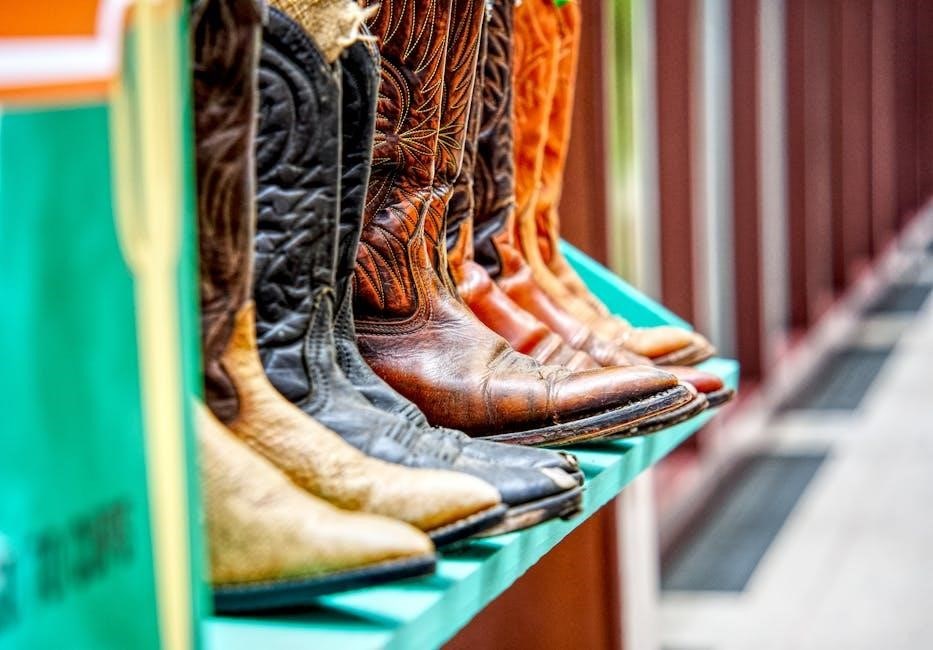
Corral Boots represent a fusion of Western heritage and contemporary fashion‚ quickly becoming a favored choice for those seeking both style and durability. Originating with a commitment to handcrafted quality‚ these boots distinguish themselves through distinctive designs and premium materials. Understanding the brand’s philosophy is crucial when selecting the correct size‚ as their construction impacts fit.
Historically‚ Corral Boots have catered to the working cowboy‚ demanding robust construction and reliable performance. This legacy translates into boots built to last‚ often featuring full-grain leather and intricate stitching. However‚ the brand has expanded its appeal beyond the ranch‚ offering a diverse range of styles – from classic Western silhouettes to more modern‚ fashion-forward designs. This evolution means considering the specific style when determining your size‚ as snip toes or wider shafts can influence the ideal fit.
Ultimately‚ a proper understanding of Corral Boots’ heritage and construction is the first step towards finding your perfect pair‚ setting the stage for a comfortable and stylish experience.
What Makes Corral Boots Unique?
Corral Boots distinguish themselves through a blend of traditional craftsmanship and innovative design elements. Unlike some brands‚ Corral frequently incorporates vibrant colors and intricate embroidery‚ offering a bolder aesthetic. Their commitment to using high-quality leather‚ often full-grain‚ contributes to both durability and a comfortable break-in period‚ though proper sizing remains key.
A defining feature is the attention to detail in their stitching and tooling patterns‚ reflecting a Western aesthetic. Many styles feature a comfortable cushioned insole‚ enhancing wearability for extended periods. However‚ the unique construction of certain styles‚ like those with snip toes‚ necessitates specific sizing considerations. The brand also offers a variety of heel heights‚ impacting the overall fit and feel.
Furthermore‚ Corral’s dedication to providing a range of widths caters to diverse foot shapes‚ a crucial aspect often overlooked. This commitment to inclusivity‚ combined with their distinctive style‚ sets Corral Boots apart in the Western footwear market‚ making accurate sizing paramount.
Corral Boot Styles: A Quick Overview
Corral Boots Styles: A Quick Overview
Corral Boots encompass a diverse range of styles‚ each potentially influencing the ideal fit. Classic Western styles feature traditional designs with varying heel heights and toe shapes – rounded‚ square‚ or snip. Snip toe boots‚ known for their elongated‚ pointed toe‚ often require extra length consideration during sizing to avoid discomfort.
Fashion-forward options include boots with bold colors‚ intricate embroidery‚ and unique cutouts. These styles may have varying shaft heights and widths‚ impacting how the boot fits around the calf. Wider shaft boots are designed for comfort‚ but require accurate calf measurements. Beyond traditional leather‚ some Corral boots incorporate exotic skins like ostrich or snake‚ which can affect flexibility and break-in time.
The brand also offers ankle boots and shorter styles‚ providing versatility for different outfits. Understanding the specific features of each style – heel height‚ toe shape‚ shaft width – is crucial for selecting the correct size and ensuring a comfortable‚ stylish fit.
Decoding Corral Boot Sizing
Accurate sizing involves navigating US‚ EU‚ and international conversions‚ alongside specific men’s and women’s measurements‚ to pinpoint your perfect Corral boot fit.
Corral Boot Size Chart: US‚ EU‚ and International Conversions
Understanding the nuances of Corral boot sizing extends beyond standard US measurements. Corral boots‚ like many footwear brands‚ cater to a global audience‚ necessitating accurate conversions for international customers. A reliable size chart is crucial for a successful online purchase or when comparing sizes across different retailers.
Here’s a general guideline‚ though slight variations can occur between styles:
- US Size 5: EU Size 35
- US Size 6: EU Size 36
- US Size 7: EU Size 37-38
- US Size 8: EU Size 38-39
- US Size 9: EU Size 39-40
- US Size 10: EU Size 40-41
- US Size 11: EU Size 41-42
- US Size 12: EU Size 42-43
International conversions can be more complex. Always consult the specific chart provided by the retailer‚ as discrepancies exist. Remember that these are approximate‚ and individual foot shapes vary. Prioritize accurate foot measurement (detailed in a later section) for the best results. Utilizing a comprehensive chart ensures a comfortable and stylish Corral boot experience.
Men’s Corral Boot Sizing
Corral boots for men generally adhere to standard US sizing‚ but subtle variations can occur depending on the boot style and construction. It’s crucial to understand that boot sizing isn’t always directly equivalent to shoe sizing; boots often require a little extra room for comfortable sock thickness and foot movement during wear.
Most men find their standard US shoe size translates well to Corral boots‚ however‚ it’s always recommended to measure your foot length and width (detailed in subsequent sections) to ensure an accurate fit. Consider the intended use of the boots – work boots may benefit from a slightly larger size to accommodate thicker socks and prolonged standing.
Pay close attention to width options‚ as Corral offers various widths to accommodate different foot shapes. A properly fitted boot will provide support and prevent discomfort during extended wear. Don’t hesitate to consult specific style guides provided by retailers for more precise sizing recommendations.
Width Options for Men’s Corral Boots
Corral recognizes that men’s feet vary significantly in width‚ offering several options beyond the standard “D” width. Understanding these options is vital for achieving a comfortable and supportive fit. Commonly available widths include B (Narrow)‚ D (Standard)‚ EE (Extra Wide)‚ and EEE (Double Extra Wide).
Men with narrower feet may find the B width provides a more secure fit‚ preventing slippage within the boot. Conversely‚ those with wider feet will appreciate the extra room offered by EE or EEE widths‚ avoiding pinching and discomfort. Determining your correct width is best achieved through measurement – measure the widest part of your foot.
If you’re between sizes‚ opting for the wider width is generally recommended‚ especially if you plan to wear thicker socks. A properly fitted width ensures even pressure distribution‚ reducing fatigue and preventing blisters. Consider consulting retailer size charts and reviews for specific style recommendations regarding width.
Women’s Corral Boot Sizing
Navigating women’s Corral boot sizing requires attention to detail‚ as it differs from standard shoe sizing. Corral boots generally run true to size‚ but variations can occur between styles. It’s crucial to understand that boot sizing isn’t always consistent with athletic or dress shoe sizes.
Women should begin by accurately measuring their foot length and width (detailed in later sections). Corral offers a range of sizes‚ typically starting at 5.5 and extending up to 11.5‚ with half sizes available. Pay close attention to the specific size chart provided by the retailer‚ as slight discrepancies can exist.
Furthermore‚ consider the intended use of the boots. If you plan to wear thick socks‚ or anticipate prolonged standing‚ it’s advisable to size up half a size. Understanding heel heights and shaft dimensions also impacts fit‚ influencing overall comfort and stability. Prioritize a snug‚ yet comfortable‚ fit to prevent slippage and ensure optimal support.
Understanding Women’s Heel Heights in Corral Boots
Corral boots offer a diverse range of heel heights‚ significantly impacting fit and comfort for women. Lower heels‚ typically ranging from 1.5 to 2 inches‚ provide greater stability and are ideal for extended wear or those less accustomed to heels. These are often found in everyday styles.
Mid-range heels‚ around 2.5 to 3 inches‚ offer a balance between style and practicality‚ suitable for various occasions. Higher heels‚ exceeding 3 inches‚ create a more dramatic silhouette but require greater balance and may not be suitable for all-day wear.
Heel height influences the angle of the foot within the boot; higher heels shift weight forward‚ potentially causing discomfort if the boot isn’t properly fitted. When selecting a Corral boot‚ consider your comfort level and intended use. A well-fitted boot will distribute weight evenly‚ regardless of heel height‚ minimizing strain and maximizing enjoyment.
Measuring Your Feet for Corral Boots
Accurate foot measurements – length and width – are crucial for finding the perfect Corral boot fit‚ ensuring comfort and preventing issues like slipping or tightness.
How to Accurately Measure Your Foot Length
To determine your foot length for Corral boots‚ you’ll need a ruler or measuring tape‚ a piece of paper larger than your foot‚ and a pen. Place the paper flat on the floor against a wall. Stand with your heel against the wall and step onto the paper. Trace the outline of your foot carefully‚ ensuring the pen is held vertically.
Measure the distance from the back of your heel (where it touched the wall) to the tip of your longest toe. Repeat this process with the other foot‚ as sizes can vary. Use the larger measurement when determining your boot size. It’s best to measure in the afternoon or evening‚ as feet tend to swell throughout the day.
Consider wearing the type of socks you plan to wear with your Corral boots during the measurement process. This will ensure a more accurate fit. Remember to measure in inches or centimeters‚ and consult a Corral boot size chart to convert your foot length into the corresponding US‚ EU‚ or international size. Precision is key for a comfortable experience!
Measuring Foot Width for Corral Boots
Determining your foot width is crucial for Corral boot comfort‚ especially given available width options. After measuring your foot length‚ identify the widest part of your foot. This is typically across the ball of your foot. Use a ruler or measuring tape to measure the distance across this point.
Ensure the tape measure is snug but not overly tight. Record this measurement in inches. Corral boots often offer various width options – B (Narrow)‚ D (Standard)‚ EE (Wide)‚ and EEE (Extra Wide). Compare your measurement to a Corral boot width guide to determine the best fit.
If your measurement falls between sizes‚ consider opting for the wider width‚ particularly if you prefer a more relaxed fit or have wider feet. Don’t underestimate the importance of width; a boot that’s too narrow can cause discomfort and blisters. Accurate width measurement prevents pinching and ensures a secure‚ comfortable stride in your new Corral boots.
Accounting for Socks and Foot Swelling
When measuring for Corral boots‚ always consider the socks you intend to wear. Thicker socks‚ like those used in colder weather or for riding‚ will significantly impact the fit. Measure your feet while wearing the typical socks you’ll pair with your boots to ensure accuracy.
Furthermore‚ feet tend to swell throughout the day‚ especially during warmer months or after prolonged standing. It’s best to measure your feet in the afternoon or evening when they are at their largest. Allow for this natural swelling when selecting your boot size.
Adding approximately half an inch (1.27 cm) to your measured foot length can accommodate swelling and sock thickness. This extra space prevents discomfort and ensures a comfortable fit even after hours of wear. Ignoring these factors can lead to boots that feel too tight or cause blisters‚ diminishing your overall experience with Corral boots.
Common Corral Boot Fit Issues & Solutions
Addressing fit problems—too tight or loose—is crucial for Corral boot enjoyment; breaking them in properly‚ and utilizing solutions‚ ensures lasting comfort and style.
Dealing with Corral Boots That Are Too Tight
Experiencing tightness in your Corral boots is a common issue‚ but thankfully‚ several solutions can provide relief. First‚ assess where the boots are tight – is it across the width‚ in the toe box‚ or around the instep? This pinpointing helps determine the best course of action.
Thick socks are your initial ally. Wearing thicker socks during break-in can gently stretch the leather. However‚ avoid excessively thick socks that compromise comfort. Boot stretchers are incredibly effective‚ particularly for width issues. These devices apply pressure to expand the leather without damaging it. Focus stretching on the tightest areas.
Professional stretching by a cobbler is a reliable option‚ especially for complex fit problems. They possess the tools and expertise to stretch leather safely and effectively. Leather conditioners can also aid in softening the leather‚ making it more pliable and easier to stretch. Apply a quality conditioner regularly during the break-in process. Remember‚ patience is key; gradual stretching is preferable to forceful attempts that could damage the boots.
Addressing Corral Boots That Are Too Loose
Finding your Corral boots are too loose can be frustrating‚ but several remedies can restore a secure and comfortable fit. The primary goal is to reduce the internal volume of the boot without constricting your foot.
Thinner socks are the simplest first step. Switching to thinner socks can take up some of the excess space. Boot inserts or insoles are highly effective. Full-length insoles provide cushioning and fill space along the entire footbed‚ while heel grips focus on preventing heel slippage. Consider tongue pads‚ which reduce the overall volume of the boot by taking up space on the instep.
Professional adjustments by a cobbler can offer more tailored solutions. They can add padding or modify the boot’s construction to achieve a snugger fit. Ensure the looseness isn’t due to incorrect sizing; if the boots are significantly too large‚ exchanging them for a smaller size is the best option. Regularly check the boot’s stitching and construction to ensure any adjustments don’t compromise its integrity.
Breaking In Your New Corral Boots
Breaking in new Corral boots is crucial for maximizing comfort and preventing blisters. Corral boots‚ known for their quality leather‚ often require a period of wear to mold to your feet. Start by wearing them for short intervals around the house‚ gradually increasing the duration each day.
Utilize boot stretchers‚ particularly in areas prone to rubbing. Leather conditioners soften the leather‚ making it more pliable and accelerating the break-in process. Thick socks can help stretch the boots‚ but avoid excessively thick socks that alter the fit permanently. Consider a professional boot stretching service for stubborn areas.
Apply blister prevention products like moleskin or anti-friction balm to areas where rubbing occurs. Walking on varied surfaces can also help flex the leather. Patience is key; avoid prolonged wear during the initial stages to prevent discomfort. Remember‚ well-broken-in Corral boots will provide years of comfortable wear.
Specific Corral Boot Features & Sizing
Distinct features like snip toes‚ shaft widths‚ and heel heights significantly impact fit; consider these nuances when selecting your Corral boots for optimal comfort.
Corral Boots with Snip Toes: Sizing Considerations
Corral boots featuring snip toes‚ characterized by their elongated and pointed toe shape‚ often require careful sizing attention. The reduced toe box volume compared to traditional round or square toe boots means you might need to size up a half or even a full size to avoid discomfort and toe cramping.
This is particularly crucial if you have wider feet. The snip toe design doesn’t readily accommodate extra width‚ so prioritizing length over a snug fit is generally recommended. When trying on snip toe boots‚ ensure you have ample space to wiggle your toes freely.

Pay attention to how the toe box feels when standing and walking; any pressure points or pinching indicate the need for a larger size. Don’t assume the boot will simply “break in” enough to resolve significant toe box issues. Consider the sock thickness you intend to wear with the boots when assessing the fit. Thicker socks will naturally reduce available space‚ necessitating a larger size adjustment.
Corral Boots with Wider Shafts: Finding the Right Fit
Corral boots designed with wider shafts cater to individuals with larger calves or those who prefer a more relaxed fit around the leg. However‚ even with a wider shaft‚ achieving the correct fit is essential for both comfort and appearance. While the shaft circumference addresses calf size‚ it doesn’t negate the importance of proper foot and ankle sizing.
Begin by ensuring the boot’s foot portion fits accurately‚ following the standard Corral sizing guidelines. Once the foot fit is confirmed‚ assess the shaft. A properly fitted wider shaft should comfortably accommodate your calf without feeling overly tight or restrictive‚ allowing for movement.

Consider the type of socks you’ll typically wear; thicker socks will naturally increase calf circumference; If you’re between sizes‚ opting for the larger size might provide a better overall fit‚ especially if you plan to layer clothing underneath your boots. Look for boots with adjustable features‚ like buckles or lacing‚ to fine-tune the shaft’s fit for a personalized and secure feel.
Corral Boots with Different Heel Heights: Impact on Fit
Heel height significantly influences the overall fit and feel of Corral boots. Lower heels generally provide more stability and comfort for extended wear‚ while higher heels alter the foot’s angle and weight distribution. This change can affect how the boot fits in the arch and across the ball of the foot.
When trying on boots with varying heel heights‚ pay close attention to how your foot settles within the boot. Higher heels may require a slightly snugger fit to prevent slippage‚ as your foot will naturally slide forward. Conversely‚ lower heels might allow for a bit more room‚ but avoid excessive looseness that could lead to discomfort or blisters.
Consider the intended use of the boots. For everyday wear or activities requiring prolonged standing‚ a moderate heel height is often preferable. For special occasions or fashion statements‚ a higher heel might be acceptable‚ but prioritize comfort and stability. Always walk around in the boots to assess the fit and feel before making a purchase.
Where to Buy Corral Boots & Get Fitted
Discover authorized retailers and explore online shopping options for Corral boots‚ utilizing size guides and seeking professional fittings for the perfect match.
Authorized Corral Boot Retailers
Finding a reputable retailer is crucial for a proper Corral boot fitting experience. Authorized dealers offer knowledgeable staff trained to assist with sizing‚ ensuring you select the correct width and length for optimal comfort. These stores typically carry a wide selection of styles‚ allowing you to try on various options before making a purchase.
Look for retailers specializing in Western wear‚ as they are more likely to stock a comprehensive range of Corral boots. Many established boot stores provide personalized fitting services‚ considering your foot shape and intended use for the boots. Checking the official Corral Boot website for a store locator is a great starting point to identify authorized dealers in your area.
Benefits of purchasing from authorized retailers include guaranteed authenticity‚ access to warranty support‚ and the opportunity to receive expert advice on boot care and maintenance. Remember to inquire about their return policy before finalizing your purchase‚ ensuring you have options if the boots don’t fit perfectly after initial wear. Prioritize stores with a strong reputation for customer service and a commitment to helping you find the ideal Corral boots.
Online Corral Boot Shopping: Tips for Success
Shopping for Corral boots online offers convenience‚ but requires careful consideration to ensure a proper fit. Begin by meticulously measuring your foot length and width‚ referencing the official Corral Boot size chart for accurate conversions. Pay close attention to customer reviews‚ specifically noting comments regarding sizing – do the boots run true to size‚ large‚ or small?
Prioritize retailers with detailed product descriptions‚ including information about the boot’s construction and materials. Check the return policy before purchasing; a generous return window is essential for trying on boots at home. Compare prices across different websites‚ but be wary of significantly discounted prices that may indicate counterfeit products.
Consider the boot’s style – snip toes or wider shafts may require adjustments in sizing. If you’re unsure‚ contact the retailer’s customer service for assistance. Take photos of your feet measurements and send them to the retailer for advice. Finally‚ be prepared for a potential break-in period‚ as leather boots often require time to mold to your feet.